

Key benefits of polyester wipes
Polyester wipes are the preferred option in many cleanroom and healthcare applications because they combine low particle generation, chemical compatibility, durability, cleanliness and softness in ways that natural-fibre wipes sometimes cannot. They can be gamma irradiated and packaged in sterile formats, making them suitable for sterile environments.
Low linting
Polyester wipes are made of synthetic, continuous, tightly knit fibres which ensure that the wipes won’t easily fray, tear or release lint. The low-lint properties of the polyester are further enhanced by laser-cut or sealed edges; this process melts the edges of the fabric together to prevent fraying and the release of loose particles.
Many polyester wipes are washed in ultra-purified water and dried in controlled environments; this process strips away any loose surface particles that may have attached during manufacture.
Chemical compatibility
Polyester wipes have excellent chemical compatibility. The tightly bound fibres allow the material to resist dissolving, degrading or shedding particles when exposed to many solvents, including IPA and other common cleaning chemicals. This makes the wipes suitable for precision cleaning.
Strong and durable
Polyester maintains strength when wet or dry, allowing users to scrub surfaces without the wipe tearing apart.
Cleanliness
These wipes are considered a “clean” option because of their fibre structure and manufacturing processes which prevent contamination. Polyester wipes have low levels of ions and extractables, meaning the wipes won’t leave traces of chemicals behind.
Softness
The polyester wipes are soft and non-abrasive, meaning that when used properly they can clean delicate surfaces such as glass and , stainless steel without scratching.
Polyester blends
Wipe blends are widely used, particularly polyester/cellulose as these combine the cleanliness and low linting of polyester with the high absorbency of cellulose. Blended wipes are often chosen for general cleanroom cleaning, while 100% polyester wipes are reserved for the most contamination-sensitive applications.
Comparison
Wipe Material |
Lint |
Strength |
Water Absorbency |
Solvent Resistance |
Typical Use |
100% Polyester |
Very low | Excellent | Moderate | Excellent | Cleanrooms, electronics, optics |
Polyester/Cellulose |
Low | Good | High | Good | General cleanroom |
Polypropylene |
Very low | Good | Low | Excellent | Oil, grease, solvent clean up |
Hospitals, pharma facilities and many cleanrooms often use all different wipe materials depending on the cleaning task and level of cleanliness required. However, 100% polyester wipes are preferred in medical device manufacturing and some cleanrooms where loose fibres can contaminate products.
Polyester wipes should be the preferred choice if you:
- need ultra-low particle contamination
- use strong solvents frequently
- work in ISO cleanrooms
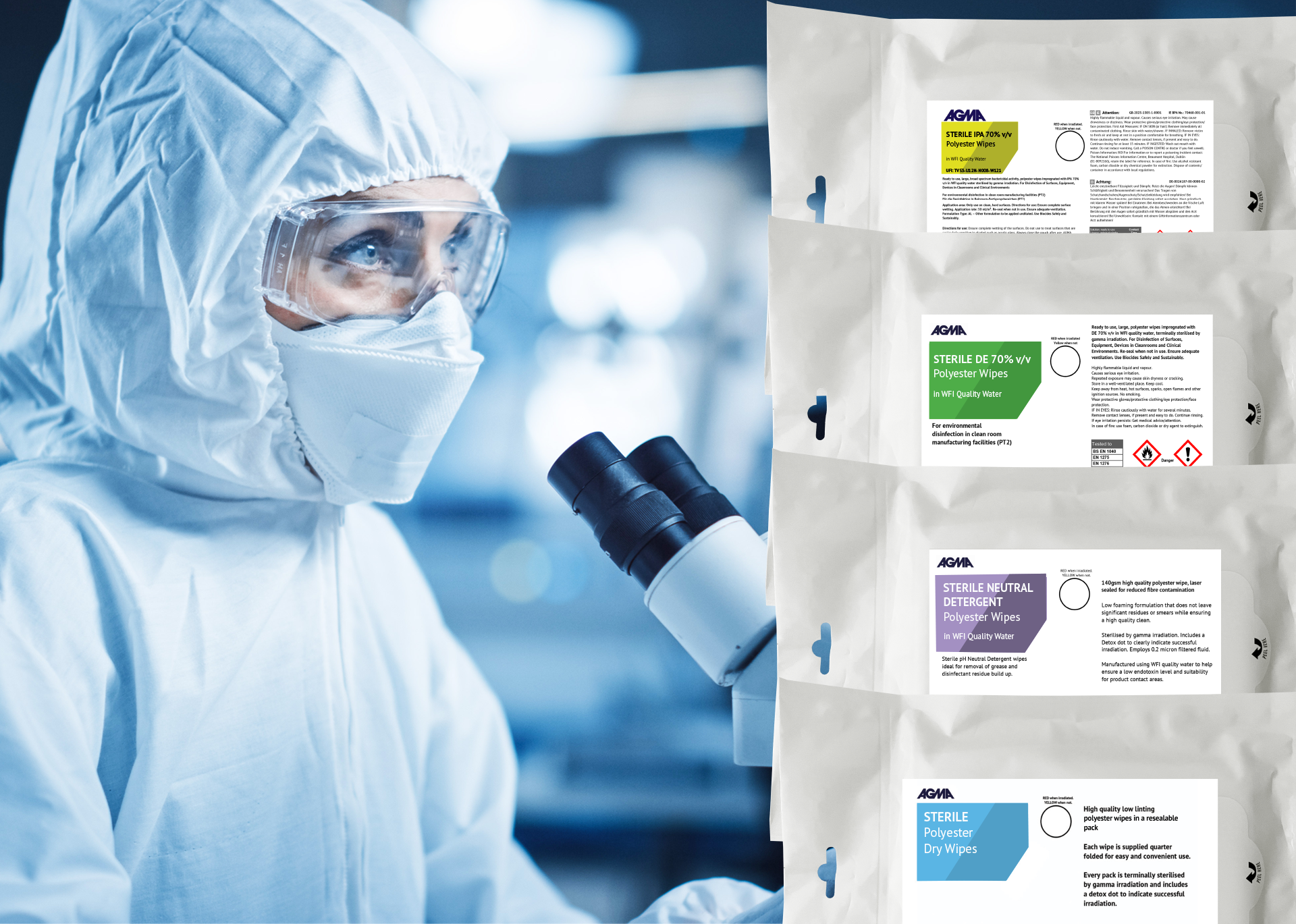
View AGMA’s range of sterile polyester wipes:
Isopropanol (IPA) – 140 gsm pre-impregnated IPA 70% v/v in WFI quality water sterile polyester wipes
Denatured Ethanol (DE) – 140 gsm pre-impregnated DE 70% v/v in WFI quality water sterile polyester wipes
Neutral Detergent – 140 gsm pre-impregnated with neutral detergent in WFI quality water sterile polyester wipes
Dry Wipes – 140 gsm ready to use sterile polyester dry wipes