
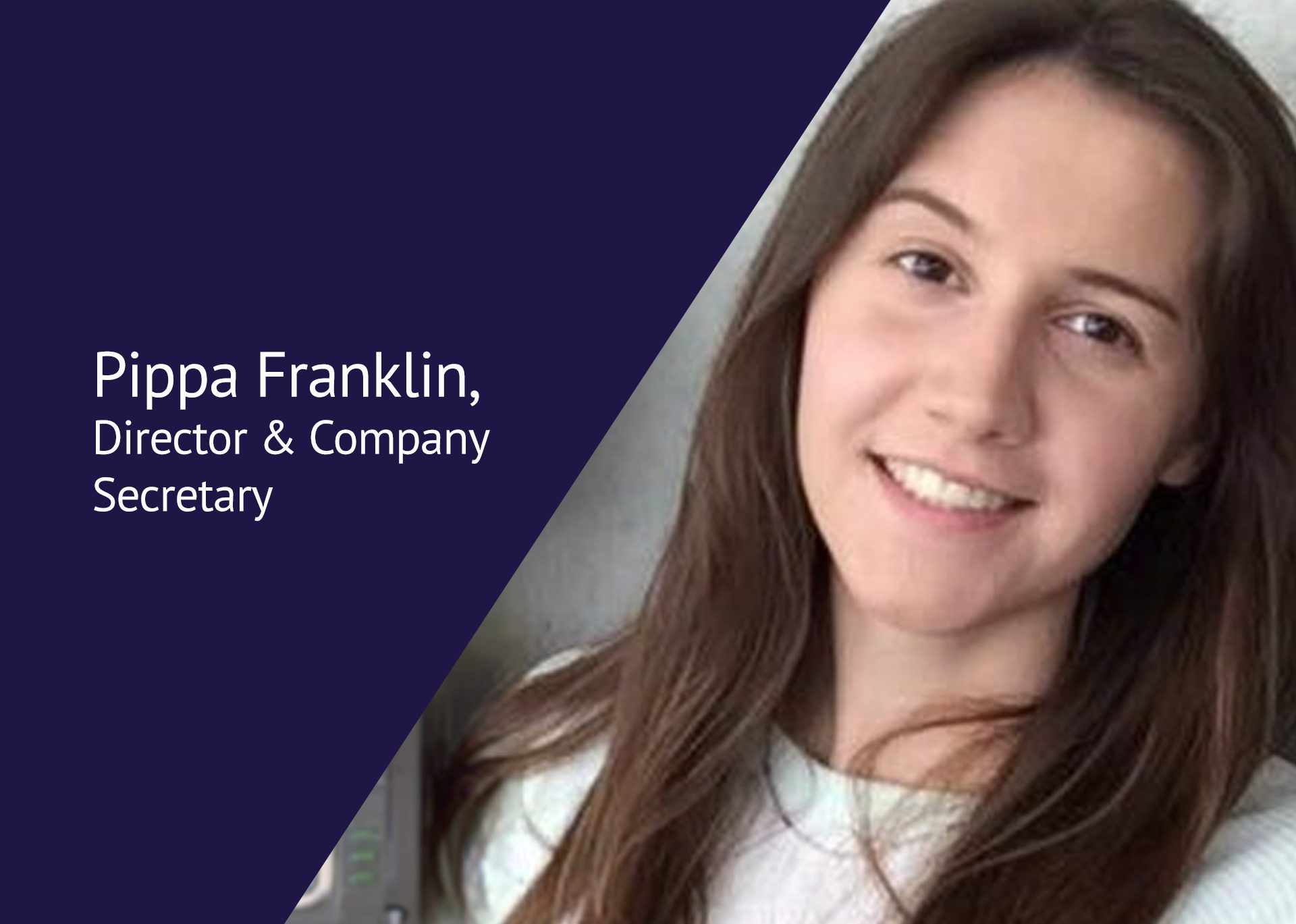

When people think about leadership in manufacturing, they often imagine decades of experience, traditional career paths and industries shaped by long-established norms. My own journey has shown me that leadership doesn’t have to follow that script.
Today, as Director & Company Secretary at AGMA Ltd, I help lead a niche UK manufacturer specialising in cleanroom cleaning and disinfection solutions. It’s an industry where precision, consistency and compliance are non-negotiable. Our products are trusted in controlled environments across the pharmaceutical, healthcare and life sciences sectors, where there is little room for error and quality is everything.
But manufacturing wasn’t where I expected my career to take me.
Early Years
I studied for a BSc (Hons) in Criminology and Forensic Science before completing a Graduate Diploma in Law (GDL) and the Legal Practice Course (LPC) at Northumbria University. My ambition was to become a solicitor. Like many aspiring lawyers, I discovered just how competitive it was to secure a training contract.
At that point, my father, who is Managing Director of AGMA Ltd, offered me the opportunity to join the business as Assistant Company Secretary. As the family business, this in itself wasn’t unfamiliar territory. I’d worked at AGMA part-time throughout school and university, starting in our cleanrooms packing and filling cleanroom wipes during school holidays in my late teens before progressing into the quality department and later into sales. Those roles allowed me to learn the business from the ground up and gave me a genuine appreciation of how every department contributes to the quality, compliance and service our customers rely on. Joining the company full-time wasn’t part of my original plan, but it proved to be the opportunity that shaped my career.
From the outset, I understood that working in a family business meant I had to earn the respect of the people around me. I never expected my surname to define my career. If anything, it meant I needed to work harder to demonstrate my capability. Every opportunity I’ve been given has been matched by a commitment to learn, contribute and continually prove myself.
Looking back
I don’t think there is a better way to learn a manufacturing business than by experiencing it from the ground up. Every role taught me something different, and each one continues to influence the decisions I make today. Understanding our production processes, quality requirements, customer expectations and the challenges faced by different teams has shaped the way I approach leadership.
Those values had already been instilled in me long before I graduated. Throughout university I balanced my studies with work, and for a period I simultaneously held down two part-time jobs to support myself financially whilst studying at university. During my LPC I was also effectively working full-time at the local cinema whilst studying full-time. Many of my peers already had training contracts, which meant their studies were funded. Looking back, those years taught me resilience, discipline and the importance of showing up every day, even when the workload felt overwhelming. They also gave me a deep appreciation for the dedication and hard work shown by people across every level of an organisation.
While my qualifications may seem an unusual foundation for manufacturing, they have shaped the way I lead. My legal education taught me to analyse complex information, manage risk and make evidence-based decisions, while my experience balancing work and study taught me adaptability, accountability and perseverance. Those lessons are just as valuable in manufacturing as they are in law.
Leading in a highly regulated sector
The role requires far more than technical expertise. It demands sound judgement, strategic thinking and the confidence to make decisions that uphold the highest standards across every part of the organisation.
I’ve never believed leadership is defined by age or title. For me, it’s about setting high standards, earning trust through consistency and creating a culture where accountability and continuous improvement are part of everyday business.
Every day, I balance governance, operational excellence and long-term strategy. Whether supporting product innovation, maintaining rigorous quality standards or strengthening customer partnerships, I believe sustainable success comes from doing the fundamentals exceptionally well, every single day.
A young female in UK manufacturing
As one of the younger female leaders in UK manufacturing, I’ve occasionally found myself challenging people’s expectations. Rather than trying to change perceptions through words, I’ve focused on letting performance speak for itself. Delivering results, building lasting relationships and maintaining uncompromising standards have become the measures by which I lead.
I’m incredibly proud of what we’ve achieved at AGMA. In recent years we’ve strengthened our position in both UK and international markets, secured places on important NHS procurement frameworks, continued investing in product innovation, achieved ISO 14001 certification as part of our ongoing commitment to environmental responsibility, and earned recognition through manufacturing award shortlists. None of these milestones happened by chance; they reflect the dedication of an exceptional team that shares the same ambition to continually raise standards, embrace innovation and deliver excellence for our customers.
Manufacturing is evolving rapidly. Advances in technology, increasing regulation and changing customer expectations continue to reshape our industry. Yet I believe the qualities that define exceptional leadership remain constant: integrity, resilience, accountability and a willingness to keep learning.
Final thoughts
If my journey has taught me anything, it’s that careers don’t always follow the path we imagine. Sometimes the opportunity you never planned for becomes the one that defines you. I hope my story encourages others, particularly young women considering careers in manufacturing or leadership, to recognise that there is no single route to success. Different experiences bring different perspectives, and those perspectives can become one of your greatest strengths.
The future of manufacturing won’t be shaped by those who simply look the part. It will be shaped by those who consistently deliver it.