
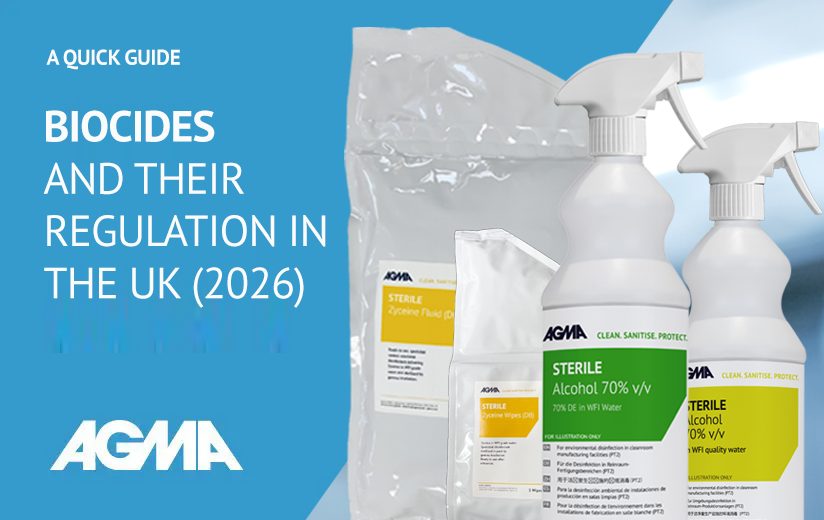

Biocides play a vital role in the high level of protection for human health, animal health and the environment.
In the battle against pathogens and other harmful organisms for example bacteria, viruses and fungi, biocides are frontline defenders in environments such as pharmaceutical cleanrooms.
With the stakes so high, it’s vital that biocides are used correctly, and only right that they are heavily regulated. Regulations set standards for biocidal efficacy, product impact, labelling, and usage. Biocides operate through different chemical and biological processes but can be hazardous if not used correctly.
GB BPR (Great Britain Biocidal Products Regulation)
GB BPR is the regulatory framework governing the authorisation, placing on the market, and use of biocidal products in Great Britain (England, Scotland, and Wales). It is based on Regulation (EU) No. 528/2012, commonly known as the Biocidal Products Regulation (BPR), which originally established the rules for biocidal products across the European Union.
Biocidal claims must be backed up with their proven efficacy according to ISO standards such as ISO 9001:2015 Quality Management System (QMS) and 14001:2015 Environmental Management System (EMS). The authorisation processes are lengthy and complex and are reviewed by ISO auditors on a regular basis.
What do regulators count as a biocidal product?
‘Biocidal products’ are defined by the GB BPR as:
“Any substance or mixture supplied to the user… with the intention of destroying, deterring, rendering harmless or otherwise exerting a controlling effect on, any harmful organism by any means other than mere physical or mechanical action…”
Biocides can operate through different and sometimes very complex chemical and biological processes. Biocides often work by chemically interfering with the metabolism, growth, or reproduction of the target organism. Others utilise living organisms, or more indirectly through the by-products like enzymes or toxins they produce, to control harmful organisms through biological means.
GB BPR Guideline Summary
-
Product authorisation
Products need to undergo a rigorous authorisation process before they can be placed on the market, including evaluating the product efficacy and safety according to specified standards.
Applications for product authorisation and active substance approval in the UK must be made through specific digital channels to the HSE, rather than the European Chemicals Agency (ECHA). -
Active substances approval
Before a biocidal product can be authorised, its active substances must be approved at the GB level.
Note: the active substance in your product must come from a supplier or dossier submitter listed on the GB Article 95 list for the specific product type you are manufacturing. -
Product types
Biocidal products are classified into different types (e.g. disinfectants) based on their intended use for example all AGMA biocides are PT02 approved for use on hard surface disinfectants.
-
Data requirements
Manufacturers need to provide comprehensive data on the efficacy, safety, and environmental impact of the product.
-
Risk assessment
Risk assessments are conducted to evaluate the potential risks associated with the use of biocidal products to human health, animal health, and the environment.
-
Labelling and packaging
Products must be labelled and packaged in accordance with classification, labelling and packaging (CLP) of chemicals legislation to ensure clear information on their proper use, potential hazards and safe handling practices.
-
Marketing and distribution
Only authorised biocidal products can be marketed, sold, and distributed in GB. BPR strictly forbids using claims that mislead consumers about hazards or efficacy. Claims that downplay the hazards of biocides are strictly forbidden and terms like: “Low-risk biocidal product”, “Non-toxic” or “Harmless”, “Natural” or “Eco-friendly” and “Animal friendly” are forbidden.
Additionally, you must legally include the exact phrase “Use biocides safely. Always read the label and product information before use” in all advertisements for biocidal products.
-
Monitoring and enforcement
Regulatory authorities monitor the market to ensure compliance and non-compliant products removed from the market and penalties imposed.
-
Review and renewal
Authorisations for biocidal products are reviewed and renewed to ensure ongoing compliance.
-
International cooperation
GB may collaborate with international regulatory agencies and organisations on information, standards and promote global cooperation in biocide regulation.
Conclusion
The GB BPR provides a robust framework for ensuring that biocidal products placed on the Great Britain market meet high standards of efficacy, safety and environmental protection. Through rigorous assessment, ongoing monitoring and strict compliance requirements, the regulation helps safeguard public health while promoting the responsible use of biocidal products.
Check the status of active substances and authorised products here: HSE Biocides Public Registers.
For manufacturers, importers, distributors and end users, understanding and complying with the GB BPR is mandatory for companies wishing to sell biocidal products on the EU or GB markets. Meeting these requirements not only enables legal market access but also demonstrates a commitment to product quality, regulatory compliance and the effective control of harmful organisms.
Contact our team to discuss the most appropriate biocidal disinfectant for your cleanroom, pharmaceutical or healthcare application.
Use biocides safely. Always read the label and product information before use.